
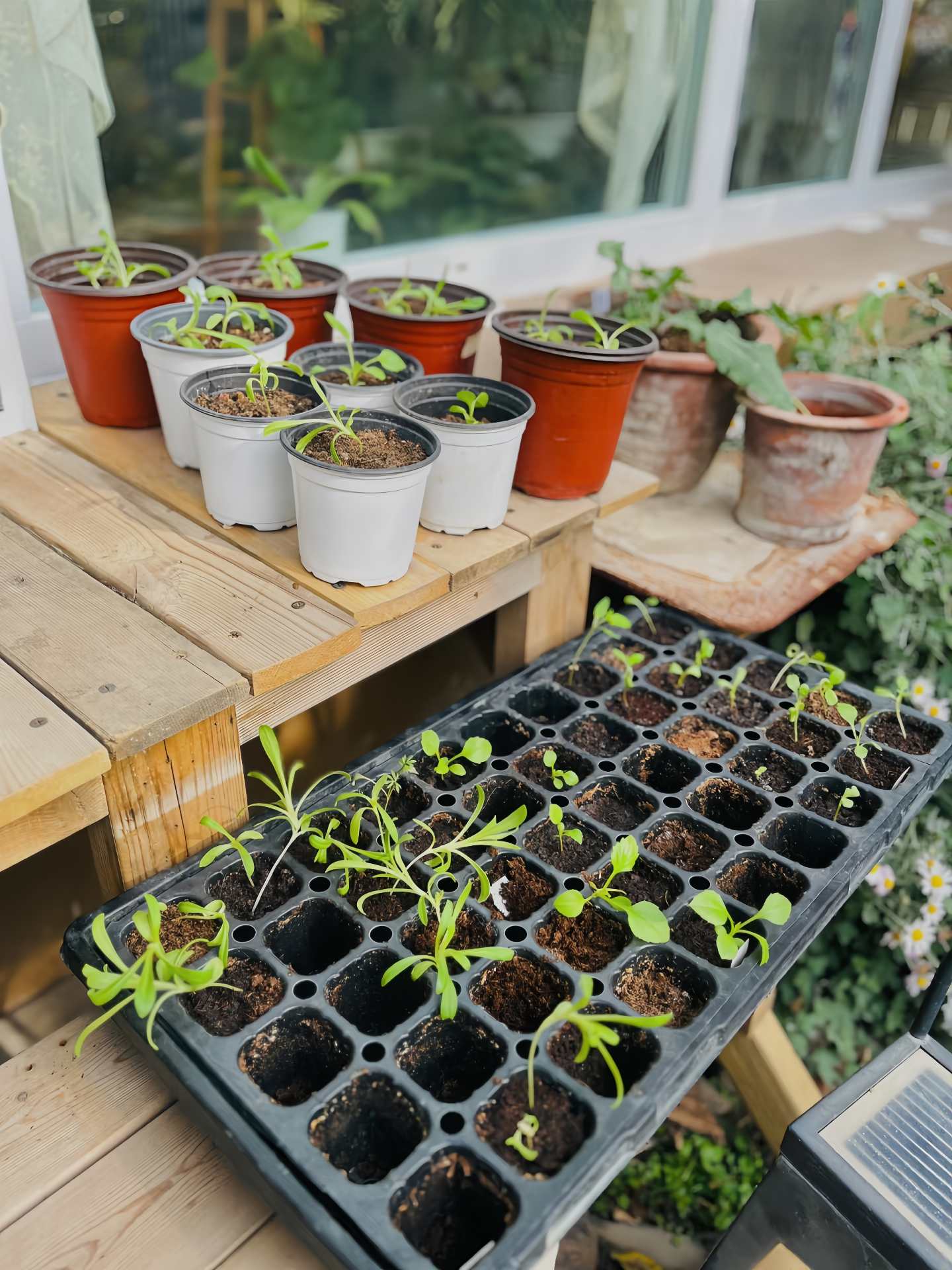
🌱 Introduction: Why Start Seeds Indoors?
Starting seeds indoors gives your plants a head start — especially in colder climates where outdoor soil is still too cold for germination.
By controlling light, warmth, and moisture, you can grow strong seedlings ready to thrive once spring arrives.
Whether you’re growing tomatoes, herbs, or flowers, learning indoor seed starting is the secret to a productive home garden.
🧰 What You’ll Need
Before planting, gather your seed-starting essentials:
-
Seed trays or small pots – Reusable plastic trays or biodegradable cups work great.
-
Seed-starting mix – Lightweight, sterile, and well-draining (not regular garden soil).
-
Seeds – Choose fresh, high-quality seeds for better germination.
-
Labels and marker – Always note the seed type and sowing date.
-
Water spray bottle – Keeps soil moist without disturbing small seeds.
-
Light source – A bright windowsill or LED grow light.
-
Plastic dome or wrap – Helps retain humidity during early germination.
Pro tip: If your home is cool, use a seedling heat mat to keep soil at 20–25°C (68–77°F) — ideal for most seeds.
🌼 Step-by-Step Guide to Starting Seeds Indoors
Step 1: Fill Containers with Seed-Starting Mix
Lightly moisten your soil before filling containers. Don’t pack it down — seedlings need air around their roots.
Step 2: Sow the Seeds
Follow the depth instructions on the seed packet.
-
Tiny seeds (like lettuce or basil): press lightly on the surface.
-
Larger seeds (like beans or peas): plant about 1–2 cm deep.
Cover gently with soil and mist with water.
Step 3: Create a Mini Greenhouse
Cover trays with plastic wrap or a humidity dome to retain warmth and moisture.
Check daily — once seeds sprout, remove the cover to prevent mold.
Step 4: Provide Light and Warmth
Place seedlings in a bright area with 12–16 hours of light per day.
If sunlight is limited, use LED grow lights about 2–4 inches above the seedlings.
Keep lights close — too far and your seedlings will stretch and weaken.
Step 5: Water Gently and Regularly
Seedlings need consistent moisture, not soggy soil.
Water from the bottom by placing trays in shallow water for a few minutes — this encourages strong roots.
Step 6: Strengthen the Seedlings
Once seedlings develop their second set of leaves (“true leaves”), start improving air circulation.
You can use a small fan for a few hours daily — it helps prevent fungal diseases and builds stronger stems.
🌿 Common Problems and Easy Fixes
| Problem | Cause | Solution |
|---|---|---|
| Seeds not sprouting | Cold soil or old seeds | Use a heat mat; check seed expiry date |
| Seedlings too tall & weak | Not enough light | Lower light source or increase light hours |
| Mold or fungus | Too humid, poor airflow | Remove cover and improve ventilation |
| Yellow leaves | Overwatering or nutrient issue | Reduce watering; use balanced liquid fertilizer |
🌸 When Are Seedlings Ready to Move Outdoors?
Once seedlings are about 2–3 inches tall and have several sets of true leaves, they’re ready for the next stage — transplanting outdoors.
But don’t rush! You’ll first need to “harden off” your plants by gradually exposing them to outdoor conditions for 7–10 days.
🌻 Final Thoughts
Starting seeds indoors gives you complete control over the growing process — from soil to light to temperature.
It’s a simple, rewarding way to ensure healthy plants and a vibrant garden long before the outdoor season begins.
🌷 What’s Next?
Your seedlings are growing strong — now it’s time to move them outside safely.
👉 Read the next guide: “Transplanting Seedlings Outdoors: When and How to Do It Right.”